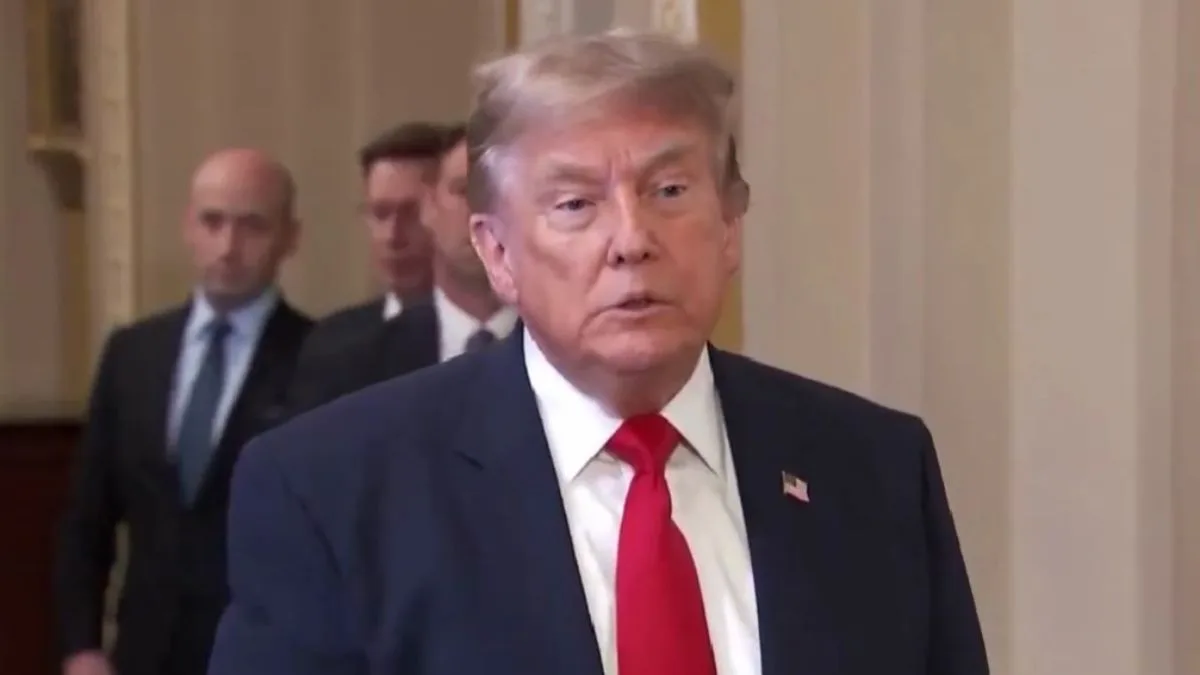
US President Donald Trump has rejected reports that the American military is facing critical shortages of air defence interceptors, insisting the country’s arsenal remains more than sufficient despite questions raised over stockpiles during the conflict with Iran.
The remarks come as media reports in the United States point to internal discussions within the administration over the pace at which Patriot and other interceptor missiles are being used. While defence officials acknowledged inventory constraints, the White House maintained that the military remains fully equipped to carry out any mission authorised by the President.
Advertisement
Speaking to The Wall Street Journal, Trump dismissed suggestions that dwindling munitions could affect military operations.
“We have far more munitions than anyone in the world, and far more than we need,” he said.
Reports point to concerns over interceptor inventory
Trump’s comments followed a report by The New York Times, which said General Dan Caine, Chairman of the Joint Chiefs of Staff, had privately warned that interceptor supplies assigned to US Central Command could come under severe strain if military operations against Iran expanded.
According to The Wall Street Journal, US Central Command chief Adm. Brad Cooper believes available inventories can still support current operations. The report said the military strategy centres on increasing strikes against Iran’s launch capabilities, subject to Trump’s approval, to reduce the threat before large missile attacks can be launched.
White House declines to release updated figures
The Wall Street Journal reported that White House officials opposed releasing updated government figures on Patriot and THAAD interceptor usage, arguing that publishing such information could compromise national security.
Even without official data, analysts Mark Cancian and Chris Park of the Centre for Strategic and International Studies estimated that at least 1,500 Patriot interceptors have been used since the conflict began. Their assessment suggests fewer than 1,000 remain in US inventories.
In an earlier report released in April, the analysts warned that reduced missile stocks could pose a near-term challenge and argued that a conflict with a military power such as China would consume munitions at an even faster rate.
Officials insist military has necessary resources
White House Press Secretary Karoline Leavitt and Pentagon chief spokesman Sean Parnell said the US military has the resources required to execute any mission directed by the President.
The Wall Street Journal also cited US officials as saying Iran has continued to adapt its missile tactics by changing flight paths, speeds and manoeuvres in an effort to evade air defence systems. According to the report, those tactics have increased the demand for interceptor missiles.
The newspaper further reported that Gulf allies are also facing pressure on their own air defence inventories after using significant numbers of interceptors during the conflict.
Earlier report linked shortages to escalation plans
Separately, The New York Times reported that Trump decided against a broader military escalation against Iran after defence officials warned that expanding operations could rapidly deplete Patriot interceptor stockpiles across the Middle East.
According to the report, officials argued that lower interceptor inventories could leave US forces, regional partners and key military facilities more vulnerable to retaliatory attacks.
The newspaper also said internal discussions intensified after three US service members were killed in Jordan when a ballistic missile struck a housing area during an attack involving Iranian drones and missiles. Officials quoted by The Wall Street Journal said most incoming missiles were intercepted, but Iran’s changing tactics have continued to test American air defence systems.